For 2026/27, planned operational spending (including interest) is forecast to be $56.4 million higher than what was included in the LTP. The main reasons for this increase are:
- $22.6 million in software development costs moved from capital to operational spending, to better reflect software as a service expense.
- An $18.2 million increase in staff salaries and wages, due to contract settlements, living wage changes, and shifting some contractor and consultant roles into permanent staff positions.
- An additional $16 million in grants, mainly for the Air Force Museum of New Zealand ($5 million) and the Ōtautahi Christchurch organics processing facility ($15 million). The capital grant for the organics facility replaces the $15 million previously included in the capital programme and offsets organics processing costs. These increases are partly reduced by lower funding for Venues Ōtautahi ($3.2 million) and ChristchurchNZ, as we bring its urban development function in-house ($1.8 million).
- $9.4 million in additional inflation, reflecting higher-than-expected inflation for 2025/26.
- A $10.6 million reduction in insurance premiums, achieved through direct engagement with insurance brokers.
Our spending is primarily funded through rates, after accounting for other sources of revenue.
You can find more information about these proposed changes to our spending from page 8 in the Draft Annual Plan.
Operational spending
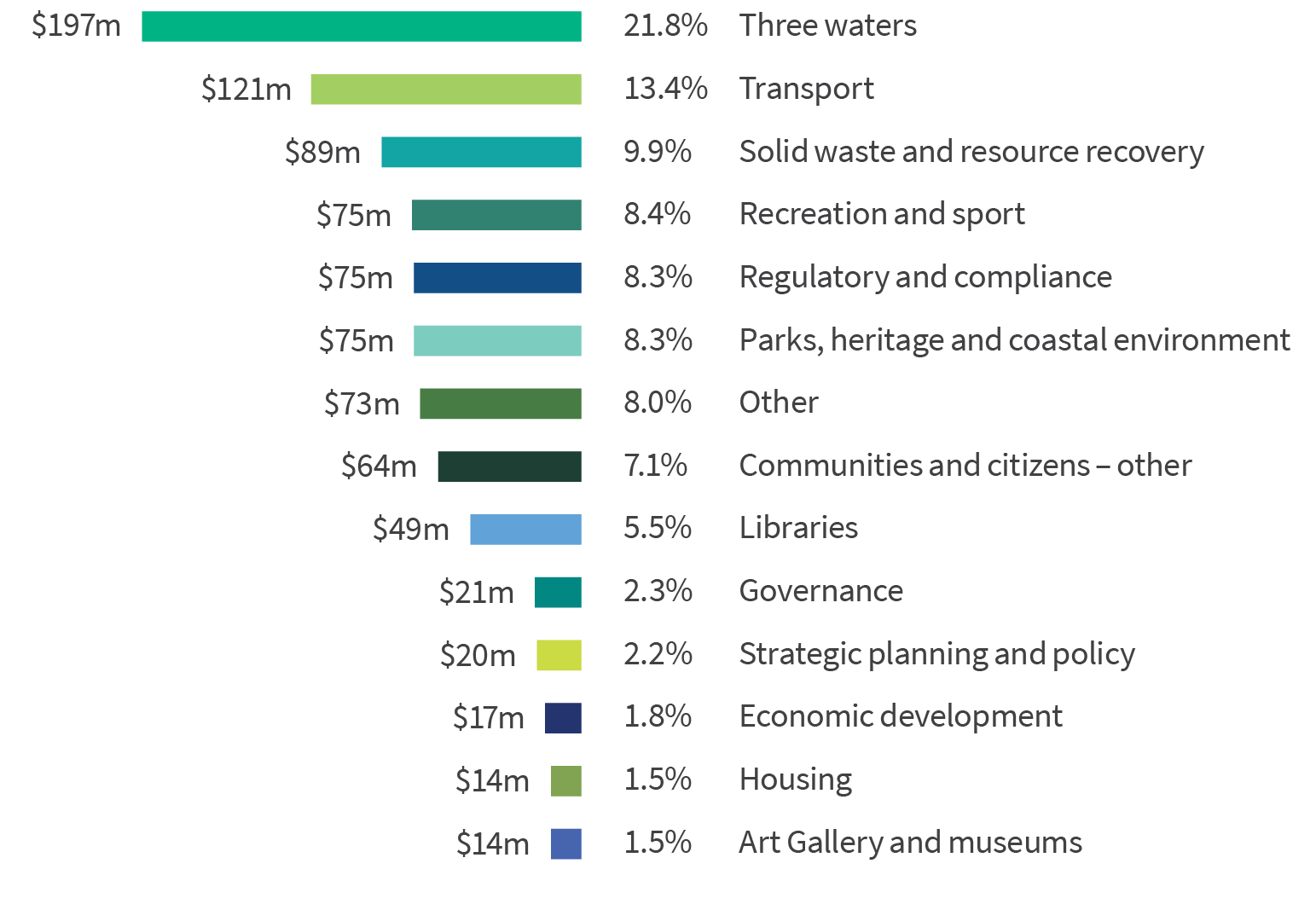
Operational spending of $904m in 2026/27
Note that "Other" includes corporate costs not charged to other activities, i.e. interest on on-lending loans, business contingencies, etc.